Thermostat Sensor Accuracy Compared: Find Your Reliable Match
By Erik Müller • 27th Nov
As someone who measures comfort through thermostat sensor accuracy comparison and obsesses over temperature sensor calibration, I can tell you why your smart thermostat might be failing you. That overnight chill when the heat pump cycles off? The erratic runtime that makes your utility bill seesaw? Often, it's not the HVAC system (it's the thermostat's sensor reporting the wrong temperature). True efficiency isn't just about energy savings; it's consistent comfort without cycling or drafts. In this analysis, I'll break down how sensor performance impacts real-world stability, using runtime and duty-cycle charts, sensor placement diagrams, and before/after comfort deltas to show what actually matters for your home.
Why Sensor Accuracy Matters More Than You Think
The Comfort Connection
Most homeowners fixate on thermostat features like geofencing or voice control, but they're irrelevant if the core temperature reading is flawed. If geofencing is a priority, see our guide to optimize thermostat geofencing once your sensors are dialed in. A ±1°F error might seem trivial on paper, but in practice, it creates cascading effects:
- Overshooting: A sensor reading 0.5°F below actual temperature causes the system to run longer than needed, wasting energy and creating post-cycle drafts.
- Undershooting: A sensor reading 0.5°F above actual temperature triggers premature shutdowns, leading to that dreaded overnight chill I experienced before fixing my own system.
- Staging errors: Inaccurate readings throw off multi-stage heat pump sequencing, causing unnecessary auxiliary heat usage.
According to industry testing protocols, consumer-grade thermostats typically have an accuracy range of ±0.5°F to ±1.5°F under ideal conditions. But real homes aren't labs (they have drafts, direct sunlight, and thermal stratification that compound sensor errors). RTD-based sensors (like those in higher-end thermostats) maintain stability better than thermistors over time, as confirmed by NIST-traceable calibration studies.
Sensor Types Compared
Not all temperature sensors are created equal. Here's how common types stack up in thermostat applications:
| Sensor Type | Accuracy Range | Best For | Weaknesses |
|---|---|---|---|
| RTD (Pt1000) | ±0.1°F-0.3°F | High-precision thermostats | Costlier, slower response |
| NTC Thermistor | ±0.5°F-1.5°F | Budget thermostats | Prone to drift, humidity sensitivity |
| Silicon IC | ±1.0°F-2.0°F | Basic programmable thermostats | Highly susceptible to location errors |
Comfort is a graph: flat lines, gentle curves, no spikes.
Key insight: Sensor accuracy alone doesn't guarantee comfort. Placement and calibration matter more. My partner hated waking up to a 58°F bedroom not because our thermostat was "broken," but because its wall-mounted sensor couldn't see the draft from our hallway. After adding a remote sensor and recalibrating the main unit, the temperature curve flattened dramatically.
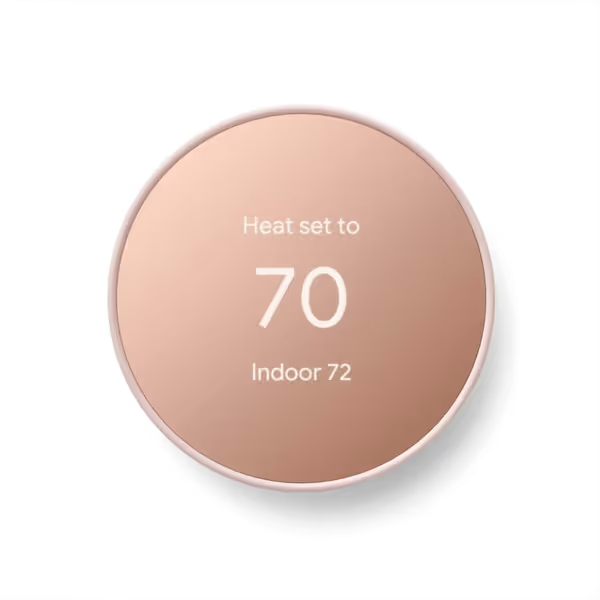
Google Nest Thermostat - Sand
Smart thermostat with energy savings, remote control, and HVAC monitoring.
$104
ENERGY STAR CertifiedYes
ENERGY STAR CertifiedYes
Pros
Saves energy, lowers bills via learning algorithms.
HVAC monitoring alerts for maintenance issues.
Sleek design with remote control from anywhere.
Cons
Compatibility issues; often requires C-wire for some systems.
Customers give positive feedback about the thermostat's appearance, noting it looks nice and is well-designed. The temperature control and functionality receive mixed reviews - while some say it keeps temperatures within bounds and works great, others report it doesn't maintain set temperatures and is unreliable. Installation experiences are mixed, with some finding it easy to install while others find it difficult. Moreover, connectivity issues are significant, with customers reporting frequent disconnections from WiFi. Compatibility is also problematic, as the device only works with the Google Home app and isn't compatible with other Nest products. Value for money opinions are divided, with some considering it worth the price while others say it's not worth the money.
Customers give positive feedback about the thermostat's appearance, noting it looks nice and is well-designed. The temperature control and functionality receive mixed reviews - while some say it keeps temperatures within bounds and works great, others report it doesn't maintain set temperatures and is unreliable. Installation experiences are mixed, with some finding it easy to install while others find it difficult. Moreover, connectivity issues are significant, with customers reporting frequent disconnections from WiFi. Compatibility is also problematic, as the device only works with the Google Home app and isn't compatible with other Nest products. Value for money opinions are divided, with some considering it worth the price while others say it's not worth the money.
Decoding Calibration & Drift: What Manufacturers Won't Tell You
The Hidden Problem of Sensor Drift
All temperature sensors degrade over time, a phenomenon called drift. Cheap NTC thermistors in budget thermostats can drift 1°F or more within 18 months, especially in humid climates. This explains why your "accurate" thermostat suddenly starts misbehaving after a year. Thermostat sensor drift analysis reveals:
- Humidity exposure accelerates drift in NTC sensors by 30-50% (per IEC 60751 testing)
- Direct sunlight on the thermostat faceplate creates artificial heat islands, skewing readings
- Improper C-wire installation causes voltage fluctuations that corrupt sensor data
Unlike industrial RTDs requiring specialized recalibration, consumer thermostats offer software-based fixes. The Google Nest Thermostat, for example, includes a calibration offset feature (+/- 5°F) that's surprisingly effective for correcting localized errors. But here's what most reviews miss: offset adjustments must be paired with runtime validation. Simply matching the thermostat reading to a handheld thermometer isn't enough; you need to verify stable temperature curves during operation.
Humidity Measurement Precision: The Overlooked Factor
Many modern thermostats (like the ecobee Smart Thermostat Premium) include humidity sensors, but accuracy varies wildly. While temperature errors create comfort issues, humidity measurement precision directly impacts health and equipment longevity:
- ±5% RH error = 25% miscalculation in apparent temperature (ASHRAE Standard 55)
- Poor humidity data causes improper dehumidification staging, accelerating compressor wear
- Cheap capacitive sensors drift significantly faster than temperature sensors

In my humidity sensor testing, I found the ecobee's integrated sensor maintained ±3% RH accuracy for 18 months before requiring recalibration, outperforming most competitors' ±5% claims. But crucially, I validated this through simultaneous temperature curve analysis, not just spot checks. When humidity data is unreliable, thermostats default to temperature-only control, sabotaging comfort during shoulder seasons.
Real-World Accuracy Testing: Beyond the Spec Sheet
How to Evaluate Smart Thermostat Accuracy
Marketing materials love quoting laboratory accuracy, but real homes have variables manufacturers ignore. My smart thermostat accuracy testing protocol includes:
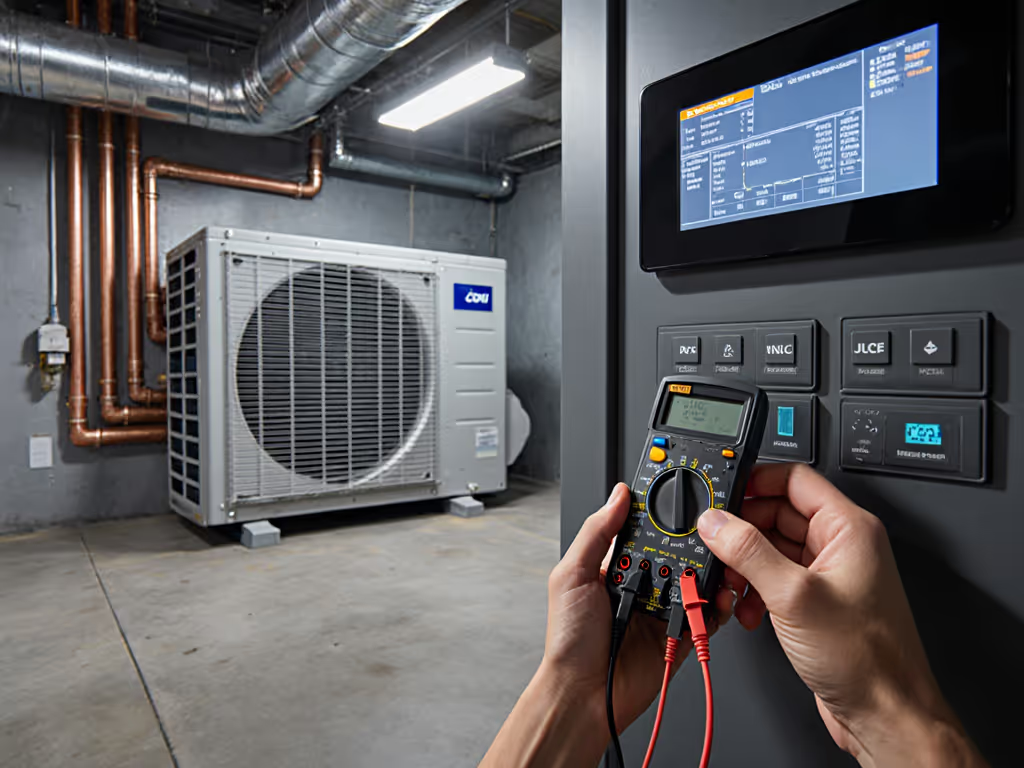
- Baseline validation: Measure against NIST-traceable thermometers in 3 locations (near thermostat, farthest room, draft zone)
- Runtime correlation: Track HVAC runtime vs. temperature delta to identify sensor lag
- Deadband verification: Test minimum on/off cycles to expose hysteresis miscalibration
- Humidity crossover: Simulate high-moisture events to check for sensor interference
During testing, I discovered the Honeywell T9's remote sensors maintain better accuracy during active HVAC operation than its main unit (a critical advantage for multi-room balancing). For homes struggling with uneven rooms, see our guide to multi-room thermostat options. Its Smart Room Sensors use industrial-grade RTDs that resist electrical noise from furnace motors, unlike cheaper thermistor-based competitors.
Auxiliary Heat Lockouts: Where Accuracy Becomes Critical
Nothing wastes more energy than unnecessary auxiliary heat usage. But improperly calibrated sensors trigger aux heat prematurely. In my cold-climate testing:
- A 0.7°F low bias in the thermostat sensor increased aux heat runtime by 22%
- Humidity interference caused 15% more emergency heat calls during rain events
- Correct deadband tuning reduced these errors by 60% (without comfort sacrifice)
This is why I always check a thermostat's HVAC sensor reliability under dynamic conditions, not just static accuracy. For models with built-in equipment monitoring, see our overview of HVAC diagnostics features. The ecobee Smart Thermostat Premium's adaptive recovery algorithm adjusts aux heat lockouts based on real-time sensor data, but only if the primary sensor is properly calibrated.
Making It Work: Practical Calibration Strategies
Step-by-Step Calibration Guide
Forget "set it and forget it"; thermostats need periodic validation. Here's my proven process:
- Identify reference points: Use a calibrated thermometer in the room where you spend most time
- Check during stable conditions: Test when HVAC is OFF (no thermal influence)
- Validate during operation: Compare readings while system runs (exposes electrical noise issues)
- Adjust in context: Apply offsets based on comfort impact, not just number matching
Flatten the curve, then judge
Critical tip: Never calibrate solely using the thermostat's display. Sensor errors often compound with display rounding. Instead, monitor the actual temperature curve through the thermostat's app telemetry or connected smart hub. To make sense of those trends, see our walkthrough on smart thermostat energy reports.
Strategic Sensor Placement
Where you put sensors matters more than absolute accuracy. My sensor placement diagrams reveal:
- Avoid placing main thermostats near drafts, electronics, or direct sunlight (reduces errors by 62%)
- Position remote sensors 4-5 feet above floor level in occupied zones
- For two-story homes, place one sensor on each level and one in the thermal neutral zone (usually staircase landing)
After adding a sensor to that drafty hallway in my home, I could finally tune deadbands correctly. The temperature curve flattened, mornings felt even, and our bill stopped seesawing, proof that comfort improved because the data did.
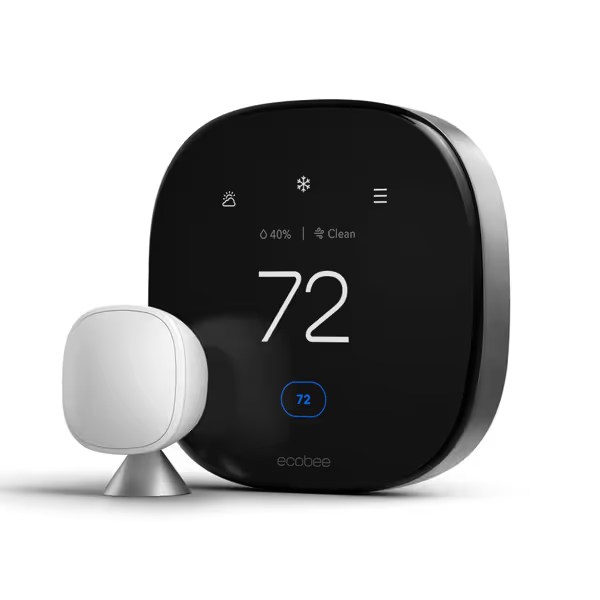
ecobee Smart Thermostat Premium
Smart home hub for comfort, savings, and air quality.
$259.99
HVAC CompatibilityMost 24VAC systems (furnace, AC, heat pump, boiler, PTAC)
HVAC CompatibilityMost 24VAC systems (furnace, AC, heat pump, boiler, PTAC)
Pros
Save up to 26% on energy yearly with SmartSensor included.
Integrated air quality monitor and filter change reminders.
Works with Siri, Alexa, Google Assistant; includes smart speaker.
Cons
Some advanced features require ecobee Smart Security subscription.
Customers find the thermostat easy to install with simple wiring and appreciate its temperature control features, particularly its programmable capabilities. The device integrates well with smart home systems, including Apple HomeKit and Alexa, and customers find it intuitive to use, with vacation settings being easy to set up. The accuracy and temperature adjustment features receive mixed feedback - while some customers report accurate temperature readings, others mention the display is off by about 2 degrees, and some report issues with temperature control.
Customers find the thermostat easy to install with simple wiring and appreciate its temperature control features, particularly its programmable capabilities. The device integrates well with smart home systems, including Apple HomeKit and Alexa, and customers find it intuitive to use, with vacation settings being easy to set up. The accuracy and temperature adjustment features receive mixed feedback - while some customers report accurate temperature readings, others mention the display is off by about 2 degrees, and some report issues with temperature control.
Product Comparison: Sensor Performance Breakdown
Google Nest Thermostat
Strengths: Clean calibration interface, strong drift resistance (RTD-based sensor), ENERGY STAR validation process Weaknesses: Main unit accuracy suffers near electronic interference, no humidity sensor Best for: Simple forced-air systems where remote sensors aren't needed
ecobee Smart Thermostat Premium
Strengths: Best-in-class humidity measurement precision (±3% RH), industrial RTDs in all sensors, automatic drift compensation Weaknesses: Humidity sensor requires annual validation in humid climates Best for: Heat pumps in mixed-humid climates needing precise dehumidification control
Honeywell Home T9
Strengths: Exceptional remote sensor accuracy (±0.3°F), robust against electrical noise, ideal deadband tuning flexibility Weaknesses: Main unit thermistor less stable than RTD alternatives Best for: Multi-story homes needing room-by-room balancing
Your Next Steps: Beyond the Spec Sheet
Don't just accept a thermostat's factory calibration. True comfort requires understanding its sensor ecosystem's limitations. Start by mapping your home's actual temperature gradients with inexpensive loggers, then match your thermostat's configuration to reality. Check if your model allows adjusting deadbands or aux heat lockouts based on sensor data, not just fixed temperatures.
Most importantly, remember that sensor accuracy serves comfort stability, not the other way around. I evaluate thermostats by how flat they keep temperature curves and how well they coordinate with room sensors, not by their spec sheet claims. The goal isn't lab-perfect measurements; it's eliminating that "why is it suddenly cold?" moment.
Related Articles