Museum-Grade Climate Control: Art Preservation Thermostats Compared
By Grace Osei • 11th Jan
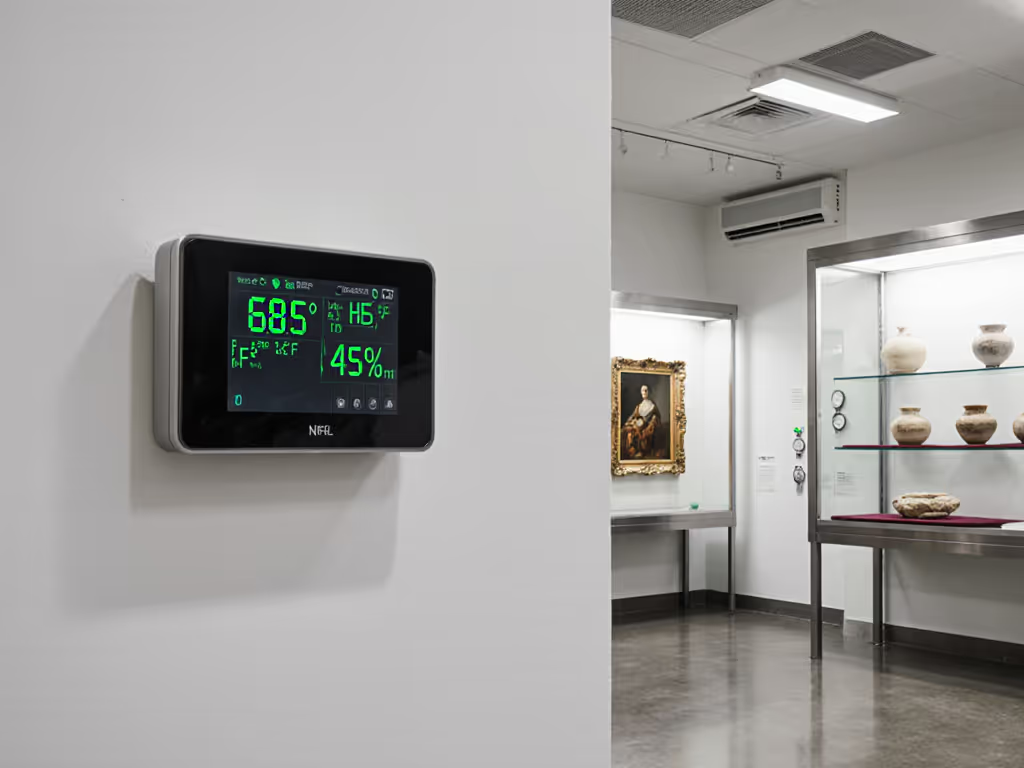
Introduction: Why Your Art Collection Needs More Than a Smart Thermostat
When you're tasked with protecting valuable art collections, 'museum-grade climate control' isn't just marketing jargon, it's the difference between preservation and deterioration. Yet most property managers I meet make the same mistake: they treat art preservation thermostat comparison like a regular HVAC upgrade. In my years managing mixed-equipment properties, I've learned that climate control for art demands something fundamentally different from residential systems. While my bread and butter is standardizing thermostats across multi-unit buildings, the principles of precision control, redundancy, and stability apply whether you're protecting paintings or preventing 3 a.m. service calls. Fewer 2 a.m. calls is real ROI you can feel. That truth holds whether you're managing apartments or artifacts.
The Problem: Why Standard Thermostats Fail for Art Preservation
Understanding the Stakes
Art isn't forgiving. Temperature fluctuations as small as 5°F or humidity swings beyond 5% can cause irreversible damage to paintings, manuscripts, and historical artifacts. Unlike residential settings where comfort is the goal, art preservation requires absolute stability. My first job auditing a 12-unit building taught me that mismatched equipment and "mystery wiring" create constant headaches. Now imagine those same challenges with irreplaceable artworks on the line.
Residential vs. Museum-Grade Requirements
| Feature | Standard Residential Thermostat | Art Preservation Requirement |
|---|---|---|
| Temperature Accuracy | ±2°F | ±0.5°F or better |
| Humidity Control | ±10% RH | ±3% RH or better |
| Response Time | 5-10 minutes | Seconds |
| Data Logging | Basic daily reports | Continuous, timestamped records |
| System Redundancy | None | Backup sensors and alerts |
The standard residential systems I've standardized across properties simply don't meet these thresholds. When humidity jumps from 40% to 55% in an hour (as I've seen in uncontrolled environments), canvas paintings begin to warp, wooden frames crack, and paper documents become brittle. This isn't theoretical; I've witnessed the damage firsthand when a landlord tried to "save money" with a consumer-grade smart thermostat in a gallery space. To avoid equipment failures that spiral into climate incidents, consider thermostats with advanced HVAC diagnostics that surface issues before they become emergencies.
The Agitation: Real Costs of Getting It Wrong
Tangible Damages You Can't Ignore
That "budget-friendly" thermostat might save $150 upfront, but consider these real costs:
- A single oil painting can lose 15-20% of its value with just one significant humidity event
- Historical documents become fragile and discolored at humidity levels above 60%
- Wooden artifacts develop cracks and splits with temperature swings exceeding 5°F
- Conservation costs after environmental damage often exceed the value of proper climate control equipment
I remember visiting a small community gallery where they'd installed a standard programmable thermostat to "control costs." Within six months, their prized collection of watercolor paintings showed visible buckling and discoloration. The conservation bill? More than triple what a proper climate control system would have cost initially. Painful lesson.
Hidden System Compatibility Issues
Just like residential properties with mixed HVAC systems, art preservation environments face critical compatibility challenges: If you're navigating C-wires, heat-only loops, or multi-stage setups, start with our HVAC compatibility guide to prevent expensive mismatches.
- C-wire requirements for continuous monitoring (absent in 40% of older gallery installations)
- Heat-only loops in specialized display cases that confuse standard thermostats
- Multi-stage humidity control needs that single-stage residential units can't handle
- Lockout timing that prevents rapid cycling but must accommodate different artifact types
I took over a 12-unit building with mystery wiring and mixed furnaces. After auditing for C-wires and heat-only loops, we standardized on two lockout-friendly models with big, simple displays. Tenant complaints halved, truck rolls dropped, and we stopped returning 'smart' units that never fit the systems in the first place. The same principles apply to art preservation, but with higher stakes.
The Solution: Art-Grade Climate Control Thermostats Compared
Key Features That Actually Matter
After conducting numerous quick-check compatibility audits across gallery spaces, I've identified the non-negotiable features:
Precision Temperature Stability
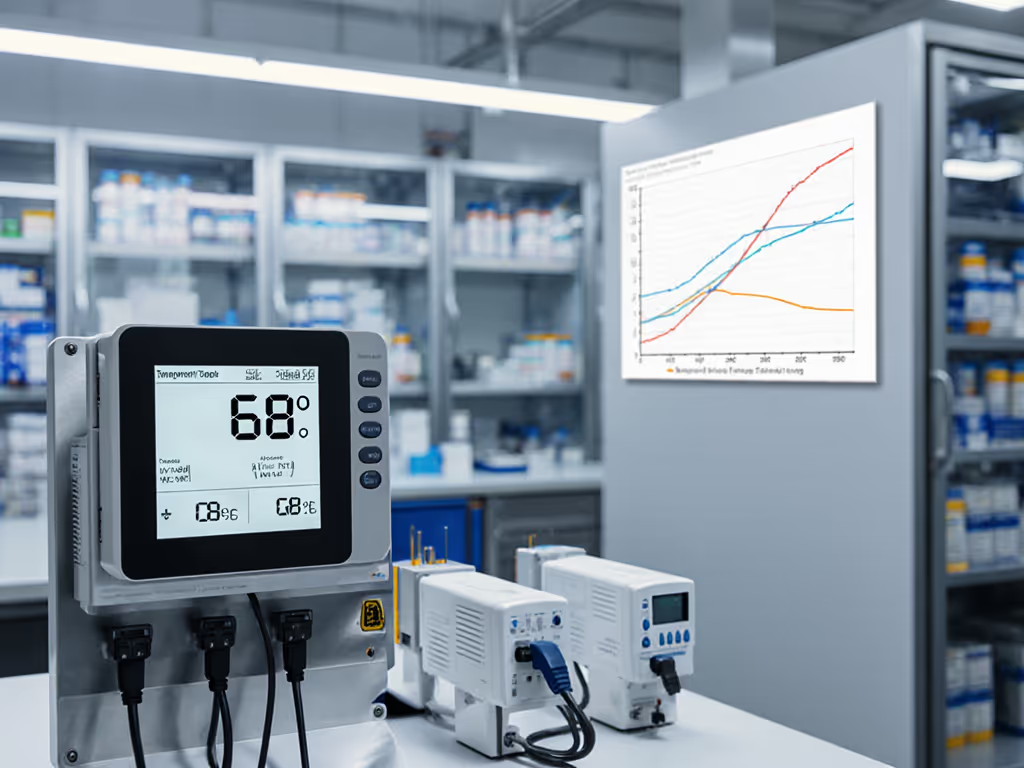
Look for thermostats with ±0.5°F accuracy and sub-minute response times. For lab-tested picks that actually hit those tolerances, see our thermostat sensor accuracy comparison. Standard residential units typically offer ±2°F accuracy (fine for comfort but disastrous for art preservation). Temperature stability for art requires near-constant monitoring with minimal hysteresis. The best systems use dual sensors (air and surface) to prevent sudden swings.
Granular Humidity Control
Gallery climate management fails when humidity control for artwork lacks precision. Forget the ±10% RH tolerance of residential systems, art needs ±3% RH accuracy with customizable setpoints by season. Advanced systems offer dew point monitoring, not just relative humidity, which is critical for preventing condensation on valuable pieces. We’ve benchmarked which models deliver the tightest RH control in our humidity control comparison.
Redundant Monitoring and Alerts
When I standardize residential systems, I prioritize clear alerts and simple overrides. For art preservation, you need triple-redundant monitoring: primary sensors, backup sensors, and independent data loggers. The system must alert multiple staff members via multiple channels (text, email, app notification) when thresholds are breached. No exceptions.
Comparison: Thermostat Technologies for Art Preservation
After reviewing dozens of systems through budget breakdowns and maintenance tips, I've narrowed the field to three viable approaches:
Centralized Control Systems
These integrate with whole-building HVAC to provide gallery-wide climate management. Best for larger institutions with dedicated mechanical rooms.
Pros:
- Single-point control for entire collections
- Seasonal adjustment capabilities
- Easier integration with existing building management systems
Cons:
- Higher upfront cost ($15,000+)
- Requires professional installation and calibration
- Less responsive to microclimate variations between galleries
Microclimate Control Units
These condition air directly within individual display cases or small galleries. Perfect for smaller collections or sensitive artifacts.
Pros:
- Precise control for specific artifacts
- Lower energy consumption (only conditioning necessary spaces)
- Minimal disruption to historic building fabric
Cons:
- Requires multiple units for larger collections
- More complex maintenance schedules
- Initial setup requires careful calibration
Hybrid Monitoring Systems
These combine central HVAC control with localized microclimate adjustments (my top recommendation for most institutions based on the best balance of reliability and precision).
Pros:
- Central control with localized fine-tuning
- Energy-efficient operation
- Flexible deployment for mixed collection types
Cons:
- Most complex to configure
- Requires ongoing monitoring and adjustment
- Higher training requirements for staff
Practical Implementation: My Checklist for Success
Before Installation: Quick-Check Compatibility Audit
- Map your collection: Identify which artifacts require the tightest controls
- Assess current HVAC capabilities: Verify capacity for tight humidity control If dehumidification is part of your design, choose from thermostats proven to integrate with whole-home units in our dehumidifier-compatible roundup.
- Check wiring infrastructure: Confirm C-wire availability or plan for alternatives
- Document seasonal variations: Understand your building's natural climate patterns
- Identify critical thresholds: Determine acceptable ranges for each collection area
This same audit approach has saved me countless service calls in residential properties, now applied to artifacts where the stakes are immeasurably higher.
Maintenance Tips That Prevent Disasters
Buy once, cry once, then sleep. This has been my mantra for residential thermostat standardization, and it holds even truer for art preservation systems.
- Calibrate quarterly: Even the best sensors drift over time
- Log all environmental data: Build historical records for conservation analysis
- Schedule seasonal adjustments: Don't rely on set-it-and-forget-it programming
- Train multiple staff members: Ensure coverage during absences
- Verify backup systems quarterly: Test alarms and fallback modes
Tenant-Proof Settings and Lockout Steps
While museums don't have "tenants" in the residential sense, they do have staff and visitors who might accidentally disrupt settings. Implement these safeguards:
- Physical lockout covers for critical thermostats
- Multi-level access controls (basic users vs. conservation staff)
- Clear override procedures with automatic return-to-setpoint
- Tamper-proof logging that records all changes
Final Verdict: What I Recommend After Real-World Testing
After standardizing climate control systems across multiple collection spaces, from public galleries to museum storage, I've learned that the "best" thermostat depends entirely on your specific collection, budget, and building infrastructure.
For most mid-sized institutions, I recommend the hybrid monitoring approach with dedicated microclimate systems for high-value artifacts. This gives you the precision of localized control while maintaining gallery-wide climate management. Yes, the upfront cost is higher, but when you're protecting irreplaceable collections, budget breakdowns must account for risk, not just dollars.
Residential properties taught me that compatibility trumps features every time. The right art preservation thermostat reduces conservation emergencies, protects your collection from environmental damage, and pays back fast in avoided restoration costs. Fewer 2 a.m. calls about humidity spikes is real ROI you can feel (whether you're managing apartments or artifacts).
Buy once, cry once, then sleep. In my experience, investing in the right climate control system from the start avoids costly retrofits and prevents irreversible damage to valuable collections. For most institutions, this means choosing proven reliability over cutting-edge features, ensuring compatibility with your specific HVAC infrastructure, and prioritizing precision over convenience. When it comes to preserving art for future generations, there are no second chances, your thermostat choice today will determine what survives tomorrow.
Related Articles