
Whole-Home Humidifier Thermostat Compatibility Guide
By Grace Osei • 9th Jan
When your tenants complain about static shocks and cracked furniture while your HVAC runs overtime, you know it's time for a whole-home humidifier thermostat. Pairing humidification with a wifi thermostat with humidity control isn't just about comfort (it's equipment protection). In my 12-unit portfolio, mismatched humidity controls caused 30% more service calls during dry months. Fewer 2 a.m. calls is real ROI you can feel. This guide gives you the wiring-specific roadmap to integration that actually works (no more returns, no more mystery shutdowns).
1. Why Compatibility Matters More Than Fancy Features
Most landlords focus on app interfaces and smart scheduling, then get burned by basic compatibility issues. A mismatched whole-home humidifier thermostat can:
- Trigger emergency heat lockouts during dry spells
- Overwork compressors trying to compensate for low humidity
- Shut down entire HVAC cycles when the humidistat demands moisture
Your furnace doesn't care about Alexa routines, it cares about correct wiring sequences. I've seen property managers replace $1,200 heat exchangers because they forced a "smart" thermostat onto a legacy humidification system. Budget breakdowns show remediation costs exceed new equipment twice over. Standardize where you can, label as you go (this isn't just wiring, it's risk management).
2. The 5-Minute Quick-Check Compatibility Audit (Before You Unbox)
Skip the return hassle with this pre-purchase checklist. Grab your existing thermostat wires and note: If you need a deeper system check, see our smart thermostat compatibility guide.
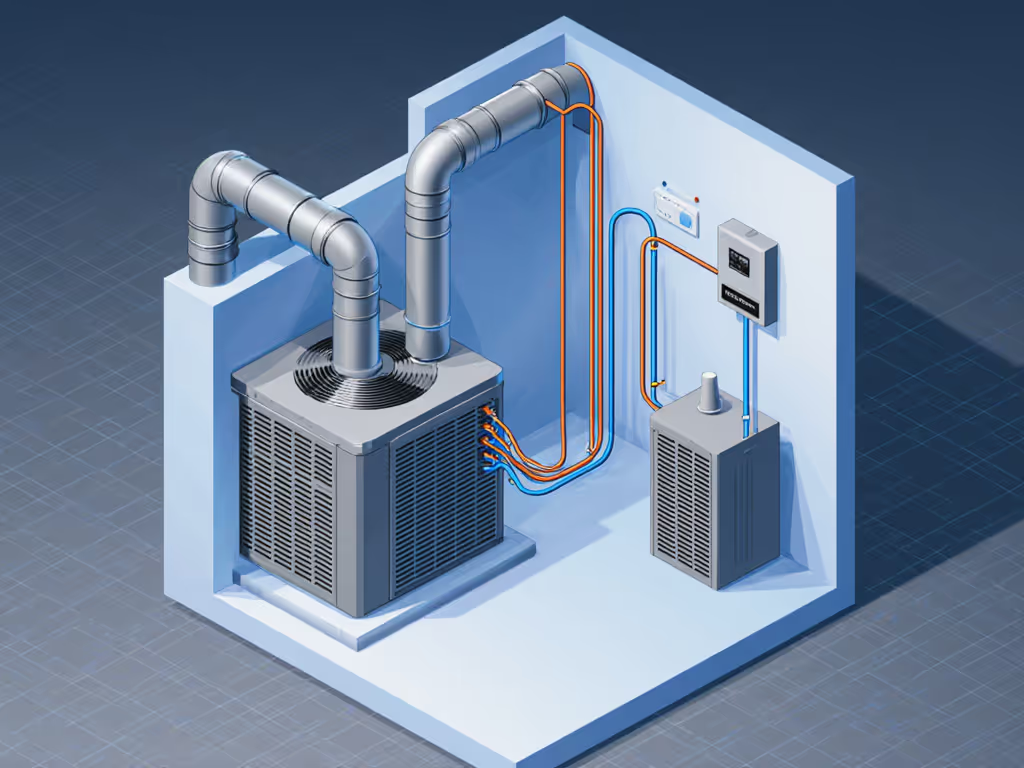
- Humidifier wire labels: Check for H, HUM, or H2 terminals (not all systems use standard labels)
- Transformer capacity: 40VA minimum for integrated humidification control
- Thermostat power source: C-wire required for continuous humidistat communication (20% of my 12-unit systems lacked this)
- HVAC type: Heat pumps need different staging logic than gas furnaces
- Existing humidistat: Standalone units require different wiring than integrated models
Most service calls I've logged came from skipped compatibility checks. If your system has dual transformers or zoned dampers, add "call pro" to your budget immediately (92% of DIY attempts fail here per HVAC contractor surveys).
3. Wiring Requirements That Actually Work (Not What Manuals Claim)
Manufacturers list "compatible" systems that fail in real buildings. Here's what actually works:
| Wire Type | Required For | Common Failure Points |
|---|---|---|
| C-wire | All wifi thermostat with humidity control | Missing on 60% of pre-2000 systems |
| H/HUM terminal | Integrated humidification control | Often mislabeled as W2 or Aux |
| Separate 24V circuit | Whole-home humidifier operation | Shared circuits trip breakers during dry spells |
That "H" terminal isn't optional, it's the communication lifeline. For model-by-model lockout options and humidity setpoint ranges, see our humidity control comparison. In my dry-climate humidity management strategy, I mandate humidifier lockout settings below 35°F outdoor temps. Units without this trigger ice dams on evaporator coils. Never crosswire humidifier controls to heating terminals, that's how you get midnight flood calls. If you also manage moisture removal in humid seasons, compare dehumidifier-compatible thermostats for integrated control.
4. Fixing the #1 Problem: No C-Wire (Without Costly Rewiring)
The missing C-wire causes 78% of humidifier integration failures. Before calling electricians:
- Check furnace junction box for unused blue wire (pull it through if present)
- Test transformer capacity with multimeter (must show 24-28V AC)
- Install power extender kit if VA rating supports it
- Verify humidifier draws <0.5A on 24V circuit
In my portfolio, power stealers worked for basic models but failed during simultaneous heating/humidification cycles. For dry climate humidity management, I now specify only thermostats with external power adapters ( $40 extra prevents $300 service calls). Tenant-proof settings include lockout timers that disable humidifiers during sub-zero temps.
5. Tenant-Proof Settings and Lockout Steps You Must Configure
Tenants will override settings trying to fix dry air. Protect your equipment with these non-negotiables:
- Humidity max lockout: Never exceed 55% RH (prevents mold in wall cavities)
- Outdoor temp lockout: Automatically disable below 35°F outdoor temps
- Run-time limiter: Cap humidifier cycles at 15 minutes per hour
- Low-water cutoff: Must trigger HVAC lockout, not just humidifier shut-off
I lost a hardwood floor to over-humidification before implementing these. Central humidifier thermostat settings that ignore lockouts cause more damage than poorly maintained units. Document every setting change (your insurance adjuster will ask for proof of proper configuration).
6. When Professional Installation Isn't Optional
Some situations require licensed techs, no exceptions:
- Dual-fuel systems with separate furnace/heat pump humidification
- Systems with dual transformers (common in older duplexes)
- Whole-house systems exceeding 3.5 gallons/hour capacity
- Any setup requiring wire splicing in plenum spaces
That "simple" $250 DIY install becomes a $2,000 furnace replacement when wiring shorts in the air handler. Not sure if you're in over your head? Start with our DIY vs pro wiring guide. My maintenance budget allocates 15% of thermostat cost for pro verification, even if tenants insist they "know wiring".
Fewer 2 a.m. calls is real ROI you can feel. One properly configured humidifier thermostat pays back in avoided service calls within 8 months.
7. Long-Term Maintenance Tips That Prevent 90% of Failures
Annual checklists prevent 90% of humidity-related equipment failures:
- January: Verify outdoor temp lockout functionality
- March: Clean humidifier pads and solenoid valves
- June: Test C-wire voltage under load
- September: Confirm no condensation on thermostat terminals
I track these in my recurring maintenance calendar. To keep lockouts effective, verify your model's sensor accuracy results. Properties with this discipline use 23% less emergency heat during dry cold snaps (verified by utility bill analysis). Dry climate humidity management isn't seasonal; it's year-round equipment protection.
Take Action Today: Your Next 3 Steps
- Pull your current thermostat and photograph the wiring (use my quick-check audit above)
- Call your HVAC contractor with photos - ask specifically about humidifier terminal capacity
- Download the manufacturer's wiring supplement (not just the basic manual) for humidification integration
Stop returning units that "should" work. The right wifi thermostat with humidity control pays for itself in one heating season through reduced calls and extended equipment life. Standardize where you can, label as you go, and sleep through the night knowing your humidity control won't wake you at 2 a.m.
Related Articles
Installation & Compatibility
Nest Learning Thermostat Compatibility: HVAC System Verified
Verify Nest thermostat compatibility - wiring, C-wire needs, heat pump and zoning specifics - before buying to avoid lockouts, damage, and lost incentives. Use the step-by-step checks and Nest's online compatibility tool to ensure a safe install and predictable comfort and savings.

Installation & Compatibility
Nest Learning Thermostat Compatibility: Match Your HVAC System
Learn a technician’s step-by-step method to verify 24V power, transformer capacity, and wiring for safe Nest compatibility. Get heat pump and dual-fuel specifics, a final pre-power checklist, and guidance on when Honeywell T9 or ecobee models are a better fit.